Fire Emblem: Fortune's Weave How Combat Works in Fortune's Weave
Turn structure, weapon roles, Blaze Gauge risk, and the safety nets that change how you commit.
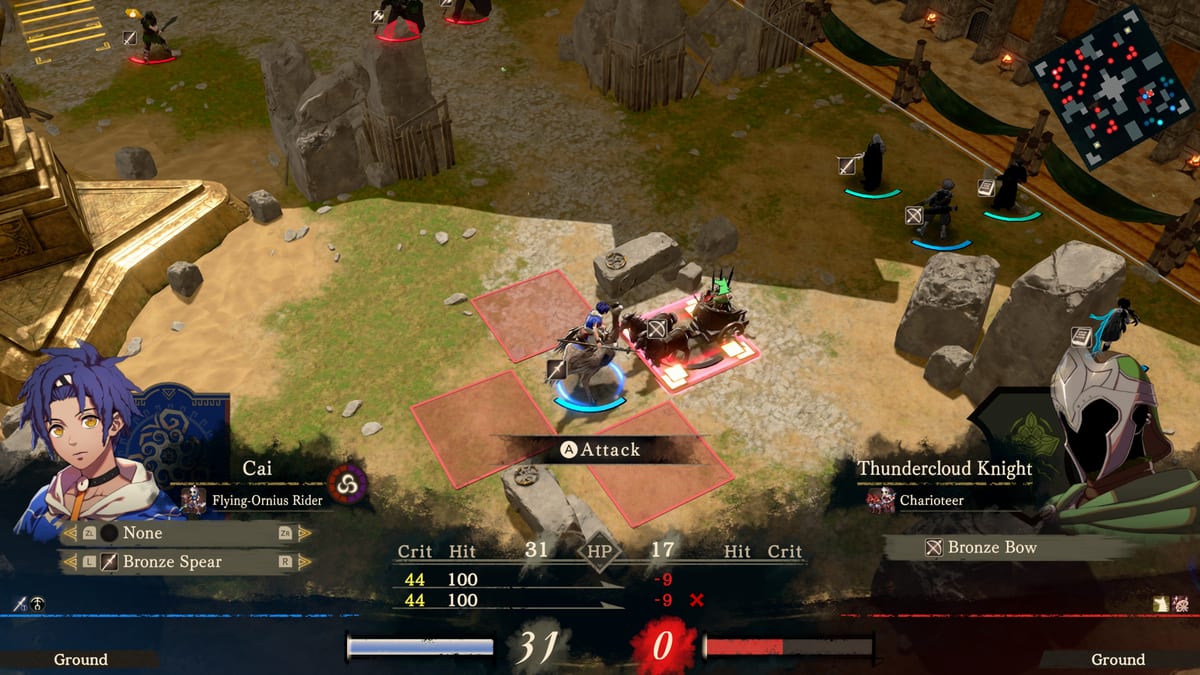
Read the board before you commit
Combat in Fire Emblem: Fortune’s Weave still asks the classic question: can you win the next exchange without stranding a unit? Matches shown in Direct footage use the familiar turn-based structure. You choose deployment and starting tiles, then alternate player and enemy phases. Movement ranges appear in blue and attack ranges in red. When every allied unit has acted, the opponent answers. Victory still comes from attrition, objectives, and not feeding free counterattacks.
This guide translates pre-release combat footage into habits you can practice. For campaign context—when matches happen inside the Heroic Games calendar—start with How to Play. For mechanic pages that isolate one system, use the Combat Hub, especially Blaze Arts, Combat Arts, and Blessings.
Positioning and adjacency
Positioning is the first skill to relearn. Close-range enemies hate being shot or cast on from outside their reach. Long-range enemies hate being crowded. Terrain can improve survival, and adjacent allies can receive buffs, so formation quality matters as much as raw stats. Before you tap Attack, ask three questions:
- Who can counter this tile?
- Who can pile on during the enemy phase?
- Does this fight leave a key unit outside healing or Fortuna recovery value?
Because Fortuna’s Blessing can rewind after a move, Fortune’s Weave encourages experimentation—but rewinds are a teaching tool, not a substitute for reading ranges. Use them to test edge cases, then lock in cleaner first tries as you learn enemy packs.
Weapons and what they pressure
Public materials list a broad arsenal. Swords remain flexible frontline tools. Spears largely occupy the anti-cavalry role associated with lances in older entries, with effectiveness indicators that can show different colors and arrow tiers for one- or two-step damage boosts. Axes trade accuracy for raw power. Bows contest distance. Gauntlets help with evasion and include flashy firearm-like variants in showcase footage. Magic pressures armored foes and covers healing or other support.
Unique arms—lightning-calling swords, unusual gauntlets, and other specialty weapons—appear in trailers as discovery goals rather than day-one constants. Plan army roles around the basics first, then chase exotic toys through shopping, dungeons, and rewards. Class choice multiplies weapon identity: a beginner Gladiator or Diviner is not the same army piece as a Specialty Charioteer or an Advanced Cataphract. Cross-check ladders in Beginner Classes, Advanced Classes, and Class Reference.
Combat Arts versus Blaze Arts
Two spike systems sit on top of normal attacks.
Combat Arts spend weapon durability for decisive effects: higher power, longer range, or other advantageous outcomes. They are the “break this enemy now” buttons when a weapon still has uses to spare. Hoarding arts forever is as bad as burning them on trash mobs; spend them when a kill prevents a disastrous enemy phase.
Blaze Arts are Hero signature moves that cost HP. Examples shown so far include Cai’s wide flame burst, Dietrich’s cloak warp across the map, and Leda’s vihuela support that can buff allies or summon a powerful monster. Using Blaze Arts fills the Blaze Gauge. At the halfway mark you gain a helpful power boost. Fill the gauge completely and Burst triggers: bonuses end and the Hero’s max HP is cut in half. That risk loop is the signature tension of Fortune’s Weave combat.
Practical rule of thumb for launch week: treat Blaze Arts as tempo tools with a visible cost meter, not as infinite ultimates. If a Hero is already battered, a flashy Blaze Art may win a tile and lose the chapter. Study more examples on Blaze Arts and pair them with route identity on Cai, Dietrich, Theodora, and Leda.
Blessings, Burst, and Fortuna’s safety net
Temple Row and related systems let you earn divine favor. Blessings grant battle advantages and can be leveled for additional effects such as temporary damage reduction. Think of them as planned buffs you schedule during prep days, not random loot. Details live on Blessings.
Fortuna’s Blessing is the other major safety rail. After each move, you may rewind to any previous point in the battle. That softens permadeath anxiety and supports learning new class kits. It does not remove the need for durable strategies on higher difficulties if those modes later restrict assists—those rules are not fully public yet, so assume the rewind exists as shown and plan conservatively until launch patches clarify limits.
Crests and Hero’s Relics are part of the wider Fire Emblem vocabulary tied to this world’s history. Pre-release coverage teases those threads without publishing a complete itemized list for Fortune’s Weave. When you theorycraft, separate confirmed Battle UI systems from Three Houses nostalgia. See Crests and Relics for what is safe to say today.
Prep that wins matches before they start
Combat skill is wasted if your calendar is empty. Arena training unlocks moves and weapon ranks. Shopping and enhancement keep durability relevant. Certification exams change movement and role identity mid-route. Recruitment adds bodies who can hold flanks while your Hero spends HP on Blaze Arts. Dungeon clashes teach combo instincts that transfer back to tournament maps.
Route choice changes which tools you see first. A Dietrich-leaning player may value warp mobility sooner; a Leda-leaning player may value summon and support windows; Cai players lean into wide pressure; Theodora players lean into command presence with veteran retainers. Compare paths in Choose Your Route and Route Compare so your combat study matches your first Hero.
Study footage with intent
The embedded trailer-details breakdown below is useful as a combat teach-aid: pause on forecast windows, range paints, and Blaze UI rather than watching only for story beats. Afterward, revisit Trailer Breakdown for narrative and setting notes, and keep the Guides Hub bookmarked for the rest of the pre-release syllabus.
Until September 17, treat exact damage formulas, skill inheritance, and endgame enemy density as unknown. Master the visible loop—position, art spend, Blaze risk, Blessing timing, Fortuna undo—and you will adapt faster when full numbers arrive.
Frequently Asked Questions
Quick answers grounded in what Nintendo has revealed so far.
What is the difference between Combat Arts and Blaze Arts?
Combat Arts spend weapon durability for spike effects. Blaze Arts spend Hero HP, fill the Blaze Gauge, and can lead to Burst if the gauge fills completely.
What does Burst do?
When the Blaze Gauge fills completely, Burst ends gauge bonuses and cuts the Hero's max HP in half. See Blaze Arts for more.
Can I undo a bad move?
Fortuna's Blessing lets you rewind to an earlier battle point after a move, which is ideal for learning positioning and art timing.
Do spears replace lances?
Public materials emphasize spears with strong effectiveness against cavalry, largely filling the tactical niche lances held in earlier games.
Where do I learn class roles that change combat?
Start with Beginner Classes and Advanced Classes, or use Class Reference.